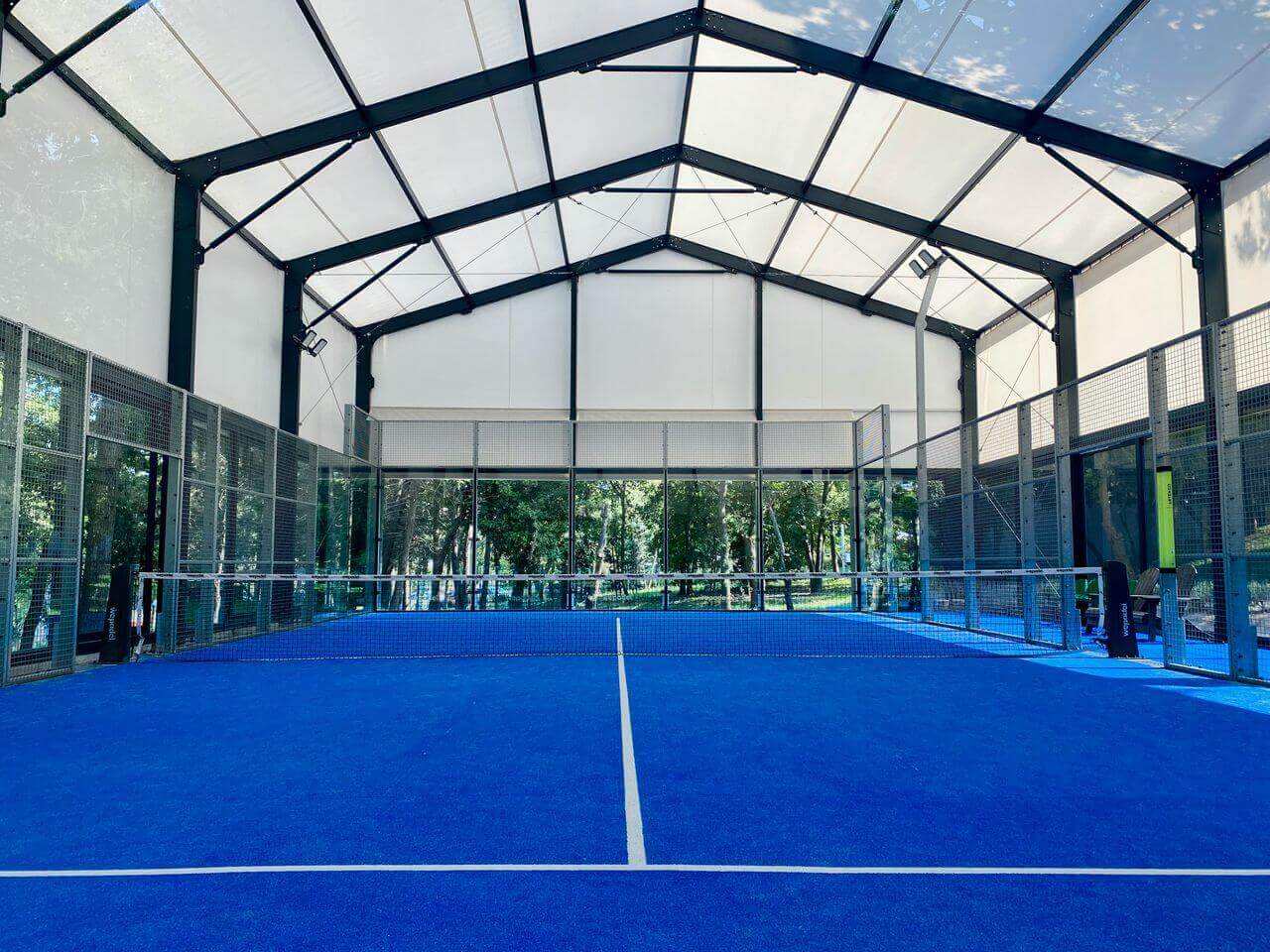
Padel leasing company, Warwick Padel, is actively exploring land opportunities to develop new padel courts around the M25.
Their aim is to expand access to one of the fastest-growing sports in the UK by turning underused or suitable sites into modern padel facilities. This includes potential conversions of existing tennis courts, open club land, or unused sporting space into high-quality padel venues.

The idea is not just about building courts, but about creating a community sports hub that can support long-term growth of the game.
What Warwick Padel Are Looking For
- Car parks
- Sports centres
- Golf courses
- Vacant land
- Warehouses
- Tennis courts
- Churches
- Farmland including barns
Other requirements:
- Minimum 3 courts (600+ sq metres)
- Outdoor or Indoor (6m+ ceiling height)
- Ability to park or nearby transport links are strongly preferred
Warwick Padel is seeking accessible land that can support the installation of padel courts, ideally in locations that already have sporting use or good transport links. Existing tennis courts are a strong option, especially where space can be reconfigured to fit multiple padel courts within the same footprint.
A standard padel court measures 20 metres by 10 metres, meaning two padel courts can often fit into the space of one tennis court. This makes conversion sites particularly attractive because they allow more players to use the same land without requiring new large developments.
In practice, Warwick Padel is interested in sports clubs, golf clubs, schools, and community spaces where land is underused or could be repurposed. Sites that already have lighting, fencing, or parking are especially valuable because they reduce build costs and planning complexity.
A key driver behind this search is demand. According to industry estimates, UK padel participation is expected to rise from around 129,000 annual players to 400,000 in the near future, showing how quickly the sport is expanding across the country.
The Growth of Padel
Padel is one of the fastest-growing sports in Europe and is rapidly gaining momentum in the UK. It combines elements of tennis and squash, but it is easier to learn and more social, which has helped it attract a wide range of players.
The Lawn Tennis Association has forecast that the number of regular UK padel players could rise from 65,000 in 2024 to around 200,000 within just a couple of years. This rapid increase is creating pressure for more courts across the country, especially in towns like Warwick where demand is already visible.
Locally, Warwick is already seeing interest from padel operators and clubs. Some sites in the area have introduced temporary or converted courts, and these have quickly become heavily used. This shows how even small installations can attract strong participation almost immediately.
The growth is also being driven by social factors. Padel is played in doubles on smaller courts, meaning more games can take place in less time. This makes it highly efficient for clubs trying to maximise usage of their land while offering a modern sporting experience.
The Revenue Opportunity of Building Padel Courts
One of the main reasons Warwick Padel is looking for land is the strong financial potential of padel courts. Compared to traditional tennis courts, padel courts generate significantly higher usage per square metre because games are shorter and courts can be booked more frequently.
A typical padel venue can operate across long opening hours and maintain high occupancy rates, especially in areas where there are few competing facilities. In some UK clubs, courts are reported to be heavily booked days or even weeks in advance during peak times, showing how strong demand can be.
This high utilisation translates directly into revenue. Pay-and-play booking systems, coaching sessions, group lessons, and club memberships all create multiple income streams from a small land footprint. Some operators also include cafés, equipment hire, and social events to increase visitor spending and dwell time on site.
There is also a wider economic benefit. One Warwick-based proposal noted that introducing padel courts can help increase visitor numbers and support local spending, while also making better use of existing club land.
In simple terms, land that may currently generate little or no income can be transformed into a high-performing sports asset with relatively modest redevelopment.
Conclusion
Warwick Padel’s search for land reflects a wider shift in UK sport towards more efficient, high-demand facilities. By converting tennis courts or underused land, they can deliver more playing space, meet rising demand, and create strong commercial returns.
With padel participation growing rapidly and UK player numbers expected to multiply several times over in the coming years, the opportunity for landowners is becoming increasingly significant. Warwick Padel is positioning itself at the centre of that growth, looking for sites that can support the next stage of the sport’s development.